

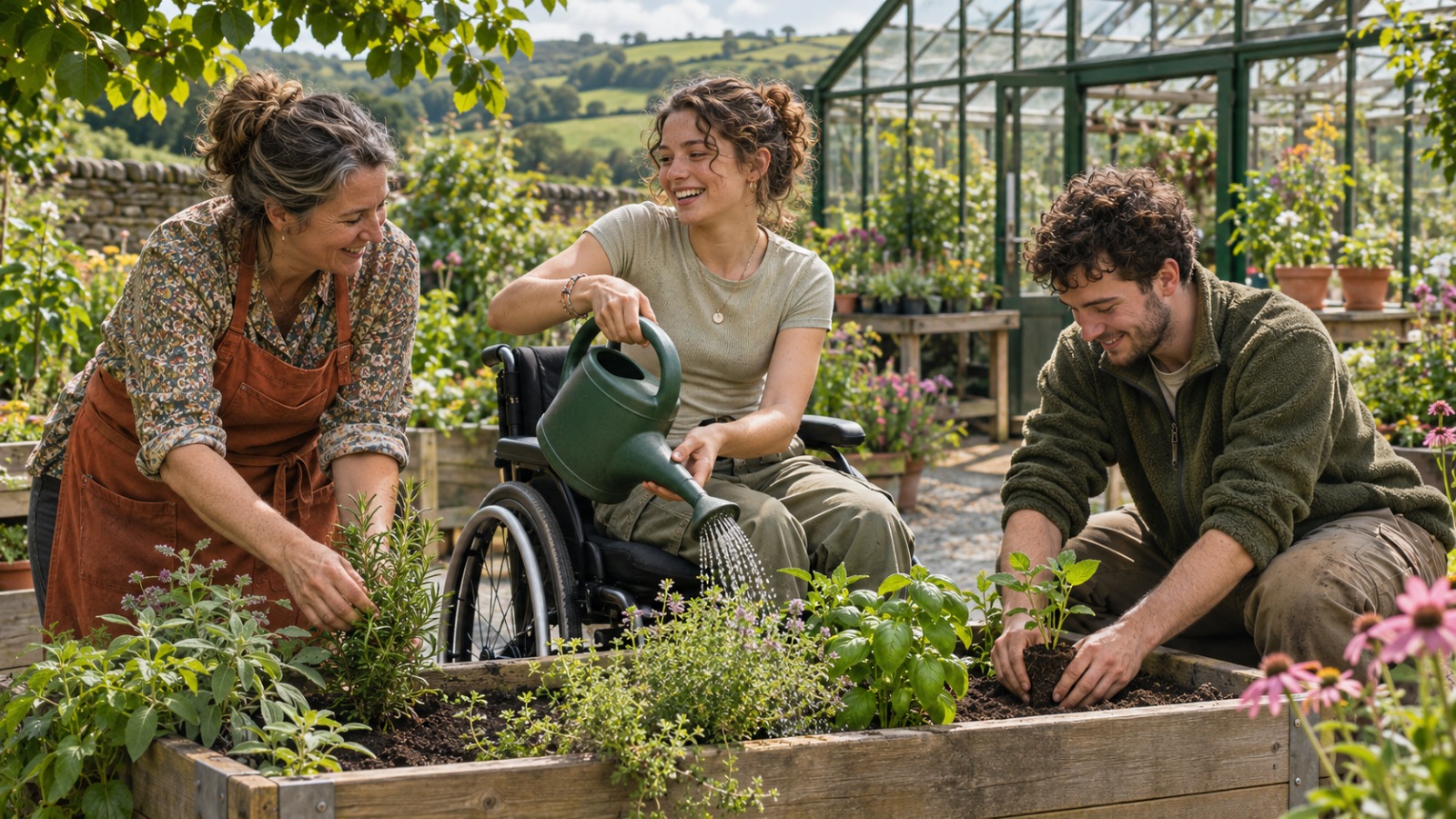

In the small village of Botton in northern England, community care is built on a simple idea.
People with learning difficulties live alongside care workers and volunteers, sharing the work, the meals, and the daily responsibilities.
During his first visit, researcher Thomas Moore joined several residents in gathering hay as part of an environmental project. He noticed how working side by side creates opportunities to get to know one another and to talk.
The Camphill community in Botton was founded in 1955 by Austrian pediatrician Karl König, as part of an international movement that encourages shared living and working.
Today, around 120 people continue this way of life across 19 houses in the Esk Valley Camphill community, where their days are divided between communal meals and morning and evening workshops.
The success of this experience is evident in the story of Max, Moore’s childhood friend.
After experiences with care services that did not adequately meet his needs, Max found in Botton a daily rhythm that helped him develop his independence.
Before, leaving the house on his own was often difficult for him.
During Moore’s visit, however, Max led his friend on a tour, introduced him to the residents, and eagerly shared their news. Max described the two years he spent there as the best of his life.
Moore later returned to live in the village as a volunteer for three months.
One detail that caught his attention was how residents take turns having lunch and dinner in different houses throughout the week.
Through this habit, house residents meet regularly, and their relationships extend beyond the home they live in. The Botton experience raises a question about the future of social care and whether daily support can be built on relationships that grow over time.