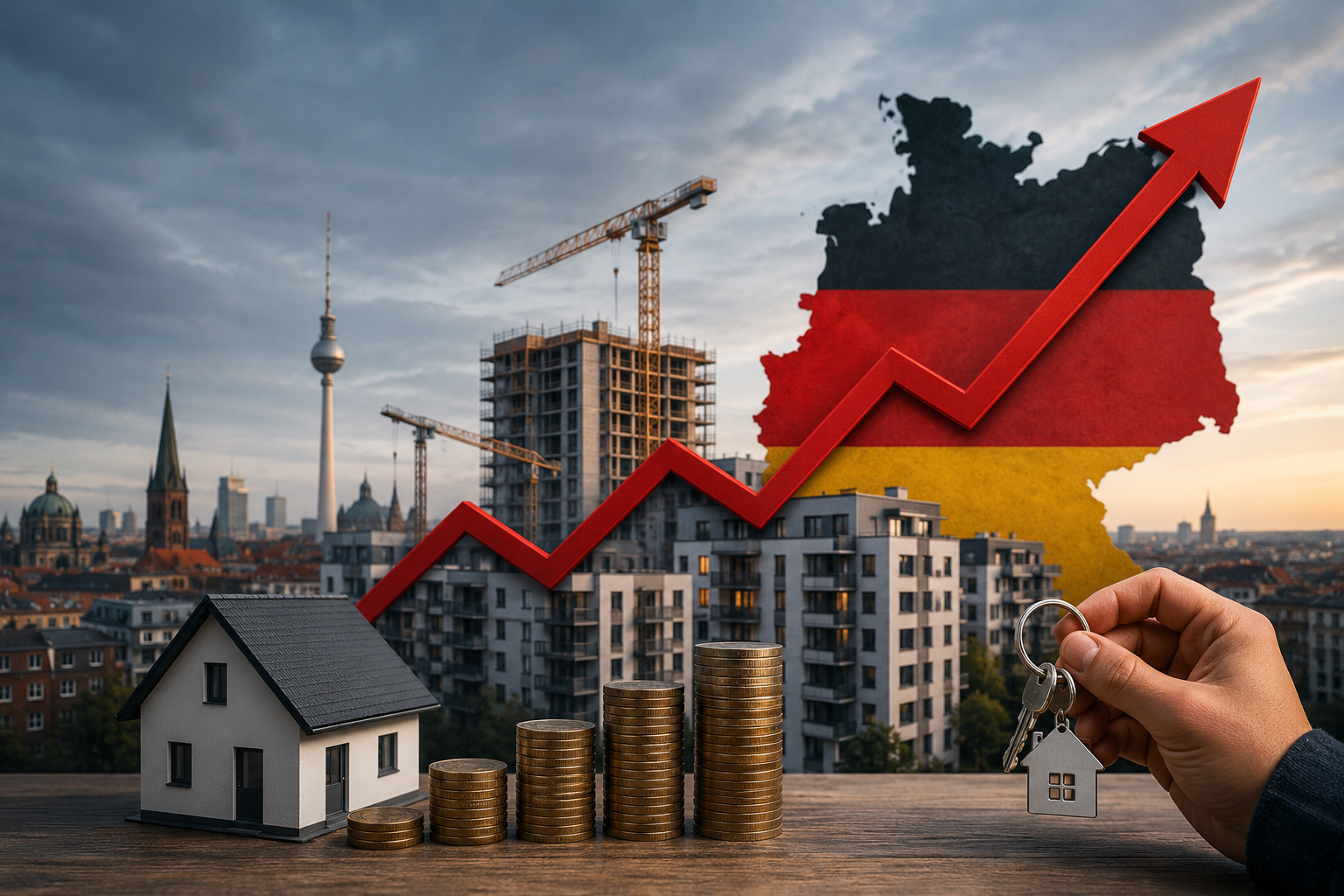

Germany’s rental crisis is on the rise.
This comes after a new survey by the German Confederation of Trade Unions revealed a significant rise in house rental prices over the past 10 years.
The survey, based on data from the market research institute Emperica, showed that average rents in Germany’s 40 largest cities rose by 51 percent.
This is between the years two thousand and sixteen and two thousand and twenty-six.
The capital Berlin recorded one of the highest rates of rise.
The average rent required has increased from eight separators of ninety-three euros per square meter to fifteen separators of eighty euros.
That represents an increase of seventy-six per cent.
In Hamburg, rents rose by fifty-four to two-percent, bringing the average price per square meter to sixteen to eighteen euros.
Munich, one of Germany’s most expensive cities, recorded an increase of fifty-one to six percent.
The average rent has reached twenty-three and twenty-six euros per square meter.
[In Rostock, rents rose by eighty-three percent, while Lübeck recorded an increase of seventy-one percent.
The figures come ahead of planned protests to demand a nationwide rent freeze.
The vice president of the German Confederation of Trade Unions, Stefan Kurzel, called for increased investment in social and public housing projects. Additionally, he called for stricter controls to curb high rents.
Kurzel criticized the conservative coalition government’s move to cut housing subsidies. He argued that the move could increase the burden on the lowest income groups.
Tackling the housing crisis requires policies that balance tenant protection with promoting investment in the construction of new affordable housing, he said.
This ensures the stability of the real estate market and preserves social justice.
Read also: