

President of the Republic General Joseph Aoun stressed the importance of the Lebanese olive tree, describing it as Lebanon’s green memory and a living witness to its history and national identity.
He also emphasized its role in providing a livelihood for thousands of families and farmers across Lebanon’s regions.
President Aoun made these remarks during his reception of Agriculture Minister Dr. Nizar Hani at Baabda Palace.
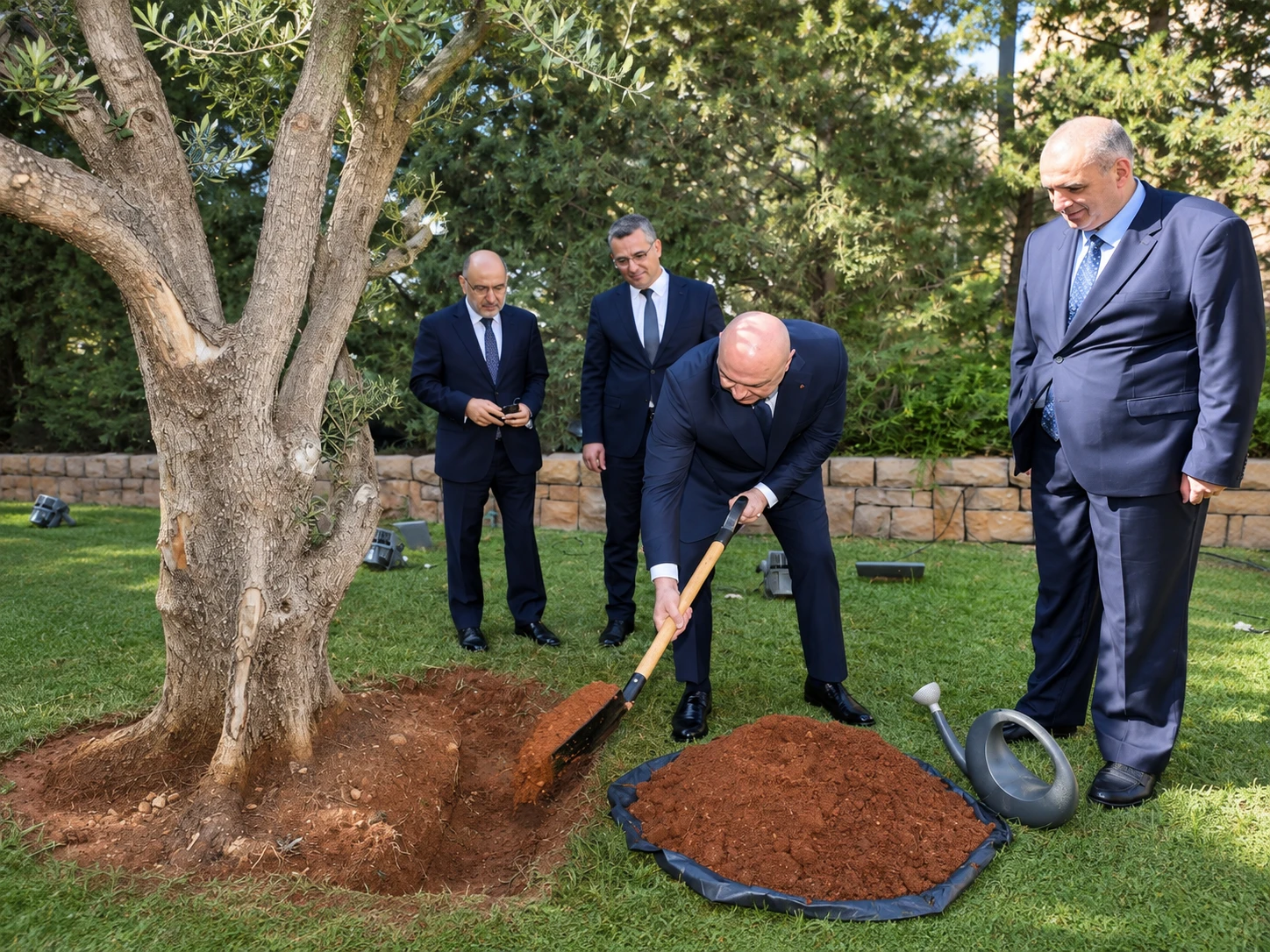
On the occasion of World Olive Tree Day, the minister planted an olive tree in the gardens of the Presidential Palace.
The Lebanese olive tree is a symbol of peace
President Aoun noted that the olive tree embodies the values of peace, hope and steadfastness.
He also called for making its protection a shared national responsibility.
This can be achieved by supporting farmers, modernizing production and processing methods,
and strengthening quality standards, which will raise the competitiveness of Lebanese olives.
For his part, Minister Hani stressed the importance of rehabilitating agricultural lands damaged by Israeli attacks and replanting the trees that were lost.
In this context, Hani announced Lebanon’s candidacy for the presidency of the International Olive Council for a two-year term.
The election is scheduled to take place in Marrakesh on December 2.
He also revealed that laboratory tests conducted in the affected southern
regions confirmed the health of the olive trees included in the testing and the quality of their crops.
President Aoun praised the efforts and strategy of the Ministry of Agriculture.
He wished Lebanon success in winning the presidency of the International Olive Council, which would strengthen its agricultural presence worldwide.
With every olive tree planted, the hope for a greener and more prosperous Lebanese land is renewed.