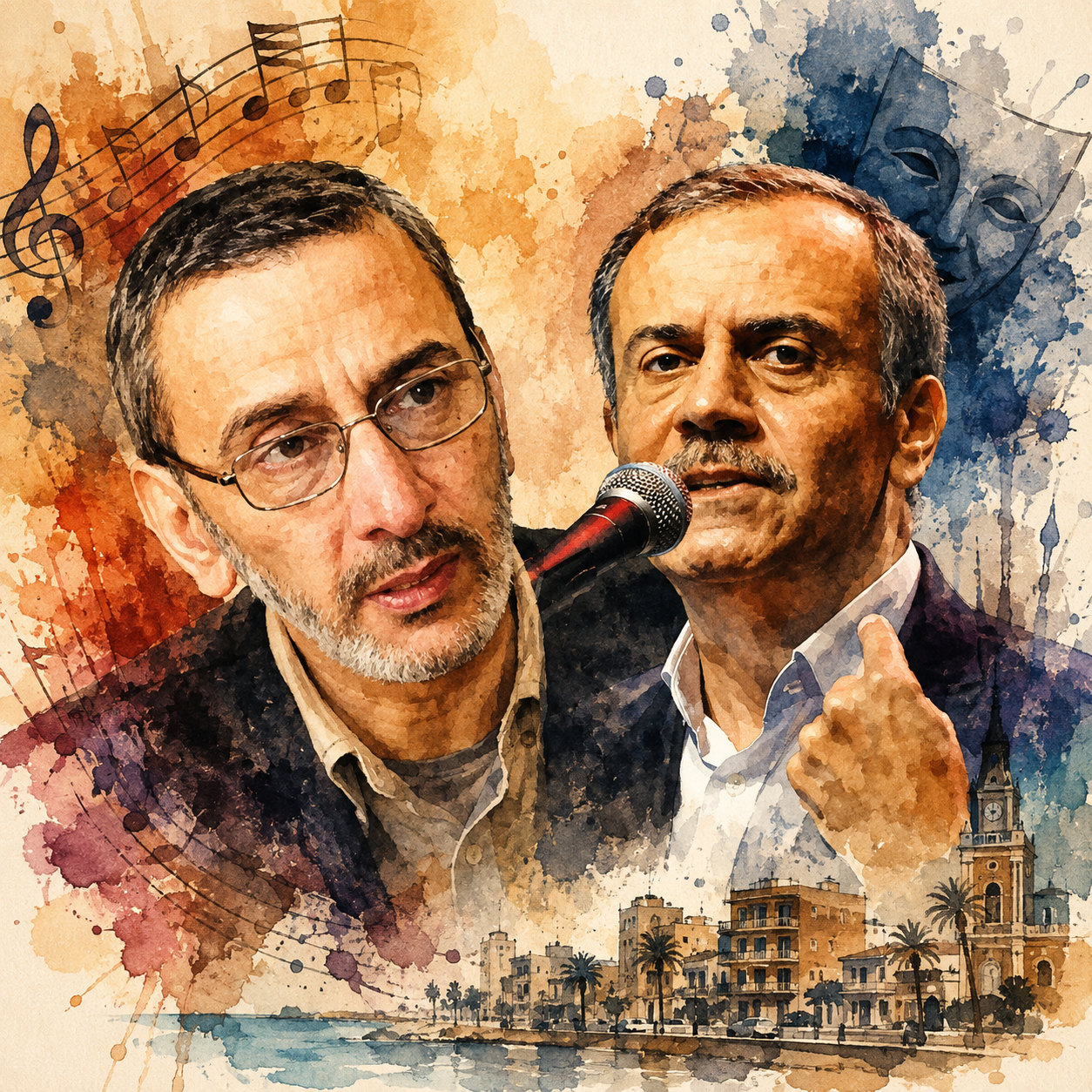

The Governor of Beirut, Marwan Abboud, referred the matter to the President of the Beirut Municipal Council to name two streets in Beirut after Ziad Al-Rahbani and Ahmad Kaabour
in the capital in honor of their careers and artistic and cultural legacies.
First, according to the Public Relations Department of the Beirut Municipality, thehttps://foo-baladiyetbeirut.andro.io/, proposes naming a street after Ziad Rahbani
to one of the streets in the Ras Beirut neighborhood, while the second proposal calls for naming a street in the Ain al-Mreisa neighborhood after Ahmad Kaabour.
The two proposals are scheduled to be presented to the Municipal Council for discussion and a decision.
Honoring Ziad Al-Rahbani in Ras Beirut
This initiative also serves as a tribute to two figures who left a prominent mark on Lebanon’s modern history and contributed to enriching the country’s artistic, cultural, and national life.
Abboud noted that Ziad Rahbani was an exceptional creative force in music, theater, and writing,
and helped revitalize Lebanese music by blending tradition with modernity.
Al-Rahbani also produced theatrical works that addressed social and political issues, in addition to composing a number of Fairuz’s most prominent songs,
making him one of the most prominent icons of culture and the arts in Lebanon and the Arab world.
Ahmed Kaabour… A Voice Synonymous with Beirut
Furthermore, regarding the artist Ahmad Kaabour, Abboud highlighted his career, which spanned more than five decades,
during which his name became synonymous with the city of Beirut and issues concerning humanity and the homeland.
Kaabour left behind a remarkable musical and artistic legacy, highlighted by the song “Anadikum,” in addition to his contributions to theater, television, and cinema, and his collaborations with a number of Lebanese artists.
In conclusion, Abboud emphasized that naming two streets in Beirut after Ziad Al-Rahbani and Ahmad Kaabour is a token of loyalty,
and also contributes to preserving Lebanon’s cultural heritage and strengthening Beirut’s status as a cradle of thought and the arts.