
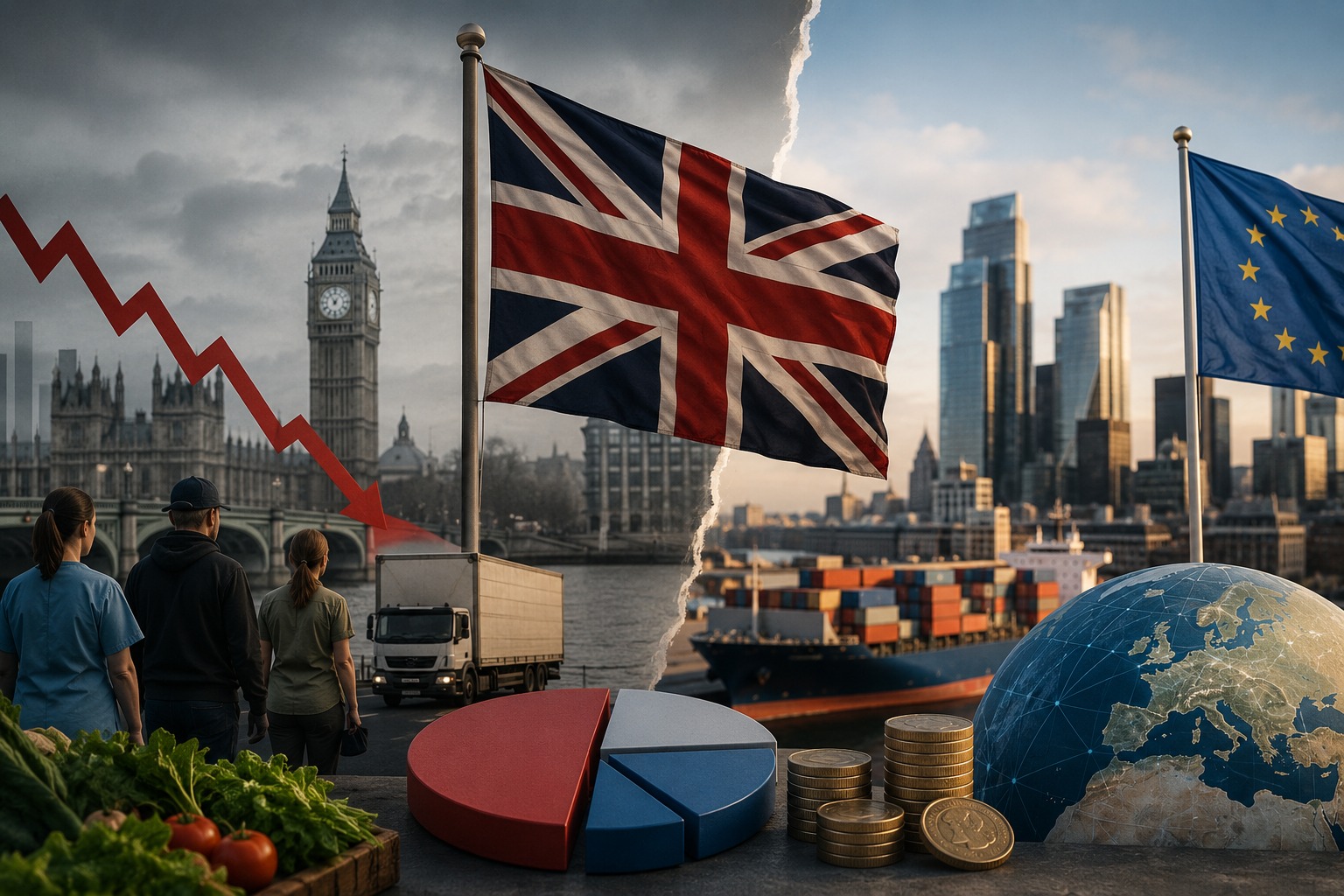

It has been ten years since the Brexit referendum in which Britons voted in 2016 to leave the European Union.
Since then, the impact of Brexit on the British economy has been the focus of a wide debate between supporters and opponents.
Weaker-than-expected economy
Recent economic studies have indicated that the British economy has become smaller by between 6% and 8%.
This was due to declining investments, higher trade costs and continued uncertainty during the first years after secession.
Decline in business investments
Commercial investment also declined by 12 percent to 18 percent, impacting company expansion and increased production.
The Pound Sterling Under Pressure
The pound has experienced significant volatility over the past decade.
It declined significantly after the Brexit referendum, and then was affected by the coronavirus pandemic and the crisis of Liz Truss’s government in 2022.
The pound is below its levels
Although it later recovered to near $1.32, it is still below its pre-referendum levels.
This reflects the magnitude of the pressures the British economy has faced.
Trade most affected
Trade is one of the sectors most affected by Brexit. British companies are required to take customs and regulatory measures when dealing with the EU.
Despite this, the EU has remained the UK’s largest trading partner.
Exports accounted for 41.4% of total British exports, while imports accounted for 49%.
Labor Market and Investment
The end of the free movement of workers led to a decline in the number of European workers in Britain.
This has resulted in shortages in some sectors such as agriculture, health care and transport.
Britain has lost some of its investment appeal, with some global companies moving their operations to other European cities.
Did the new agreements offset the losses?
Britain signed new trade agreements after Brexit and joined important international economic partnerships.
The British economy has not collapsed
Ten years after Brexit, the British economy has not seen a collapse as some expected.
But it has incurred clear economic costs of slowing growth, weak investment, and trade complexity.
British independence
In return, Britain gained greater autonomy in managing its economic and immigration policies.