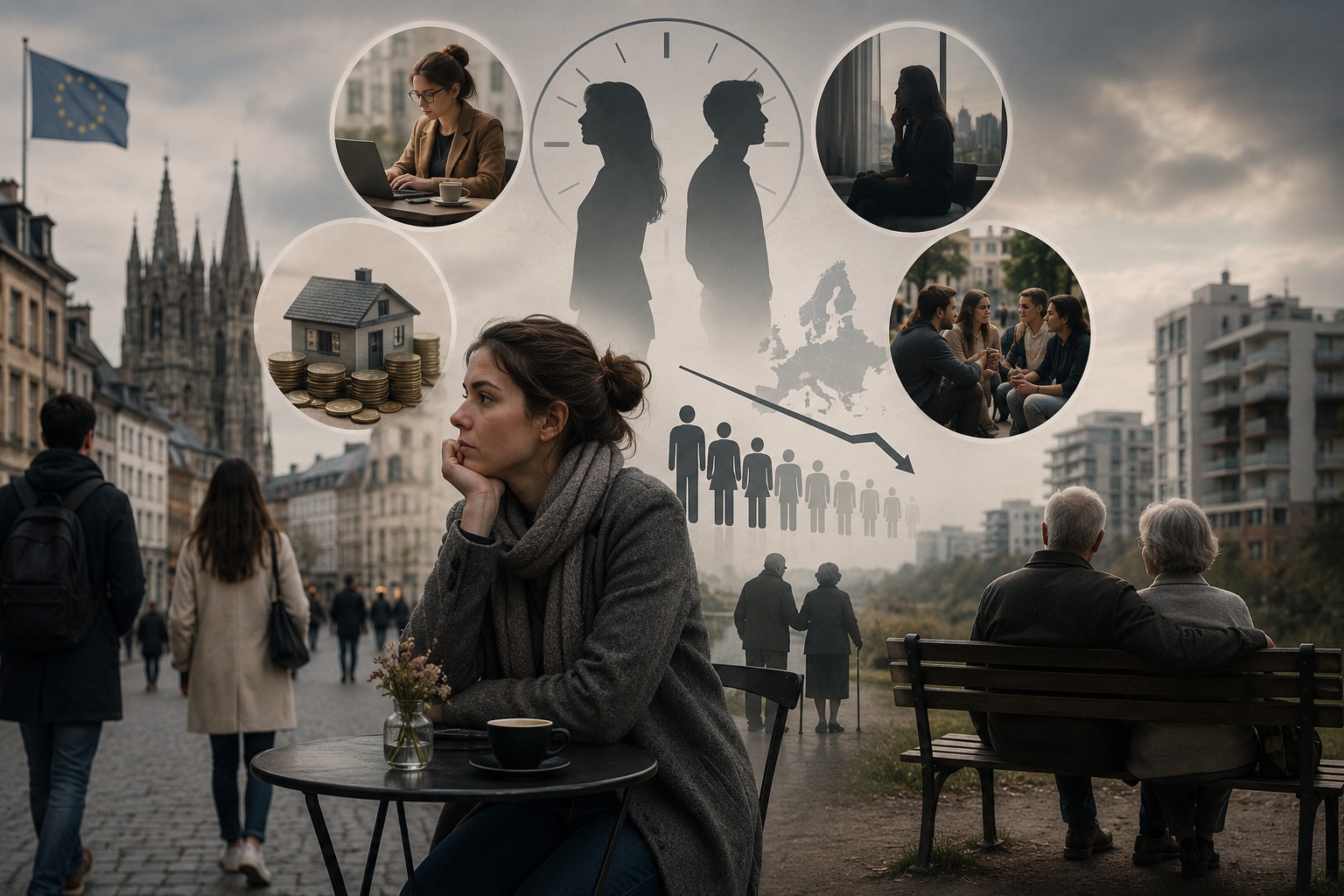

The phenomenon of spinsterhood in Europe or the delay in marriage is one of the social issues that concerns researchers and decision-makers in a number of European countries.
Decline in marriage rates
Despite the economic and social development that these countries are witnessing, the marriage rates are witnessing a significant decline compared to previous decades.
This phenomenon is most pronounced in countries such as Germany, Sweden, France and Italy, where the average age of marriage is increasing year after year.
In some European regions, the average age of first marriage exceeds 30 years for women and 33 for men.
Career stability before thinking about marriage
The causes of this phenomenon are due to multiple factors. The first is the desire to achieve professional and financial stability before thinking about marriage.
The rising cost of living and housing is also pushing many young people to postpone engagement for long periods.
Changing the social perception of marriage
One reason is also the change in the social perception of marriage. Many individuals prefer personal independence or living alone.
The proliferation of informal relationships has also contributed to a decline in the demand for traditional marriages.
Economic factors play an important role. High unemployment rates or job instability make some young people reluctant to take on family responsibilities.
The consequences of spinsterhood in Europe include lower fertility rates and declining population growth in some countries.
Governments also face challenges related to population ageing and labour shortages in the future.
A social effect is also an increase in loneliness in some individuals, especially with age.
Traditional family ties that were an essential part of the structure of society may also decline.
Addressing the phenomenon requires family-friendly policies, stable job opportunities, easier access to housing, and a work-life balance, according to the meeting’s experts.
Delayed marriage in some European countries remains a complex issue related to economic, cultural and social factors, which makes dealing with it a comprehensive vision that ensures the promotion of family stability and the achievement of societal balance.