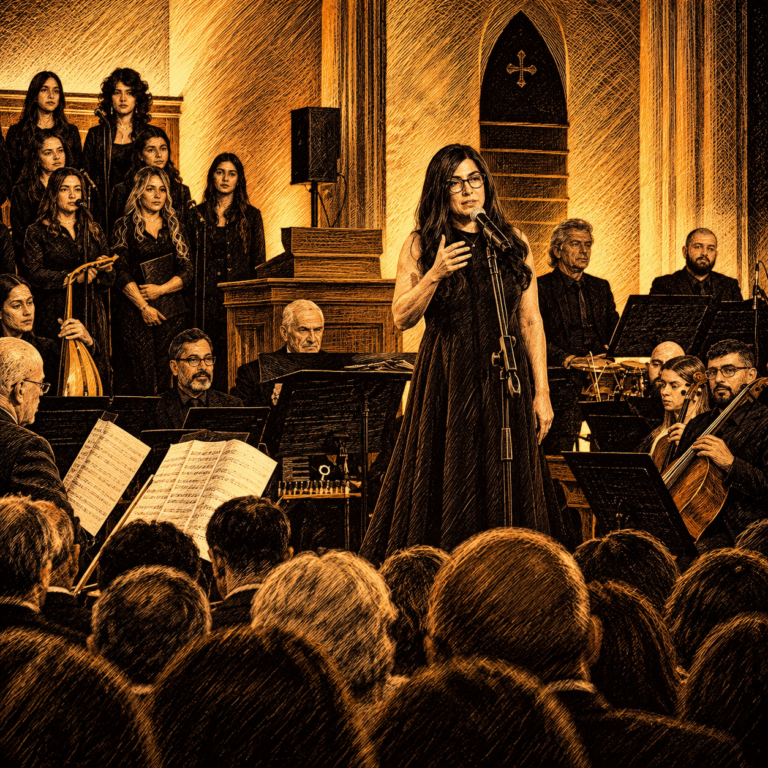

The Philocalia Institute is preparing a special musical evening celebrating the legacy of Egyptian composer Sayed Darwish, to be held on the stage of Casino du Liban on the evening of Saturday, October 17, 2026.
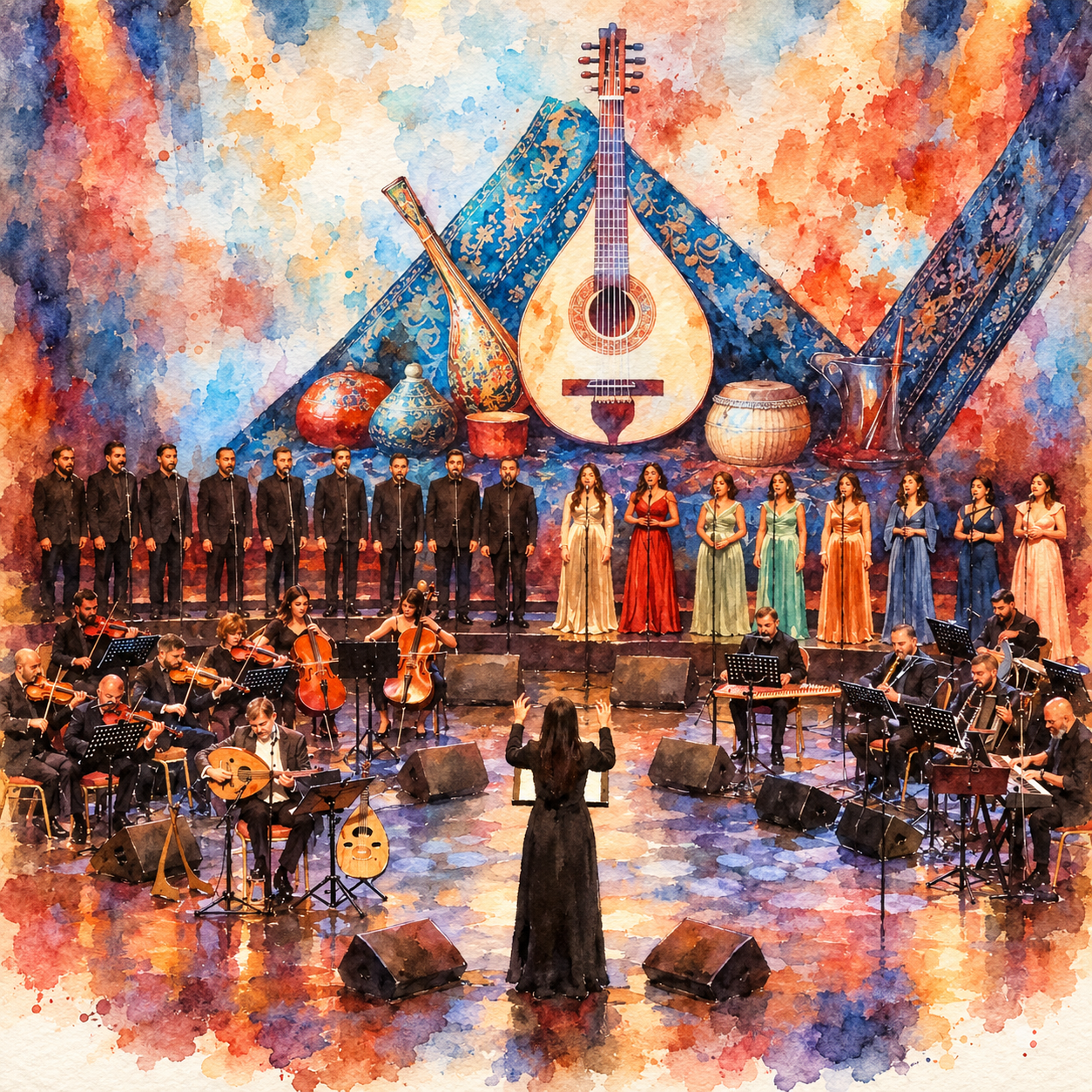
The concert will feature the Ishtar ensemble, the Institute’s Arabic Eastern singing group, led by Sister Marana Saad. Artist Charbel Rouhana will also present new musical arrangements of Sayed Darwish’s works, accompanied by an Eastern orchestra made up of a select group of musicians.
Sayed Darwish with a new musical vision
The concert will feature a collection of Sayed Darwish’s most famous melodies. Darwish, who lived between 1892 and 1923, left behind a legacy that marked a milestone in the history of Arabic music.
The evening is not meant simply to revive the songs in their traditional form. Rather, it seeks to present them with a contemporary vision that preserves their original identity while giving them new musical dimensions at the same time.
Among the works etched in the memory of Arab audiences are “El-Helwa Di,” “Zourouni Kol Sana Marra,” “Oum Ya Masry,” “Ahoo Da Elly Sar,” and “Ya Bahjat El-Rouh.”
During his short career, Sayed Darwish managed to bring music closer to the people. His works dealt with daily life, love, work, homeland and joy, which helped keep his songs alive for more than a century.
Charbel Rouhana reinterprets the melodies
Charbel Rouhana is handling the rearrangement of a number of Sayed Darwish’s works, drawing on his experience with Eastern music and its expressive potential.
Rouhana seeks to bring out new details within melodies the audience knows well, without compromising their core spirit.
As a result, the arrangements combine the authenticity of Eastern music with a modern musical breath.
The vision relies on rhythms, melodic phrases and musical dialogues that give the works new space, while preserving the artistic character that distinguished Sayed Darwish’s music.
Ishtar brings the heritage to a new generation
The presence of the Ishtar ensemble forms a central pillar of the concert. The group brings together a number of young voices who seek to preserve Eastern vocal heritage and present it in a language close to the new generation.
This participation aligns with the role of the Philocalia Institute in nurturing young talent, passing on musical knowledge, and preserving Arabic vocal heritage.
The project also aims to affirm that heritage does not stay alive simply by being preserved, but through being reintroduced and developed in ways that suit successive generations.
Marana Saad leads the musical gathering
Sister Marana Saad is leading the artistic work, bringing together the voices of Ishtar, Charbel Rouhana’s arrangements, the Eastern orchestra, and the spirit of Sayed Darwish’s melodies.
The orchestra includes a number of professional musicians playing various Eastern instruments, including the oud, qanun, strings and percussion.
In this way, the Casino du Liban evening becomes a meeting point of three essential elements: heritage, creativity and the future.
The audience will listen to works that are, in some cases, over a hundred years old, but performed with voices and arrangements that give them new life on stage.
The Philocalia Institute honors Egyptian composer Sayed Darwish with a special concert at Casino du Liban, featuring new arrangements by Charbel Rouhana and the Ishtar ensemble led by Sister Marana Saad.