

More than 65 years after the release of director Alfred Hitchcock’s famous horror film “Psycho” in 1960, its score remains one of the most prominent elements that cemented its place in film history. Composer Bernard Herrmann succeeded in turning the music into a psychological tool that instilled fear and tension in viewers.
Music that created horror
The famous shower scene, in which the character Marion Crane, played by Janet Leigh, is attacked by a mysterious assailant, is considered one of the most influential scenes in cinema history.
Herrmann’s music played a decisive role in its success, as he used sharp, rising violin sounds to mimic screams and heighten the terror.
Interestingly, Hitchcock did not initially want to add music to this scene. But Herrmann convinced him to watch the version with the music added, and the director immediately changed his mind and approved its use.
Herrmann relied on an orchestra made up of 50 string players only, aiming to create a dark sound that would match the black-and-white cinematography.
From “Psycho” to Hollywood’s most famous films
The influence of “Psycho’s” music was not limited to horror films, but extended to famous cinematic and musical works.
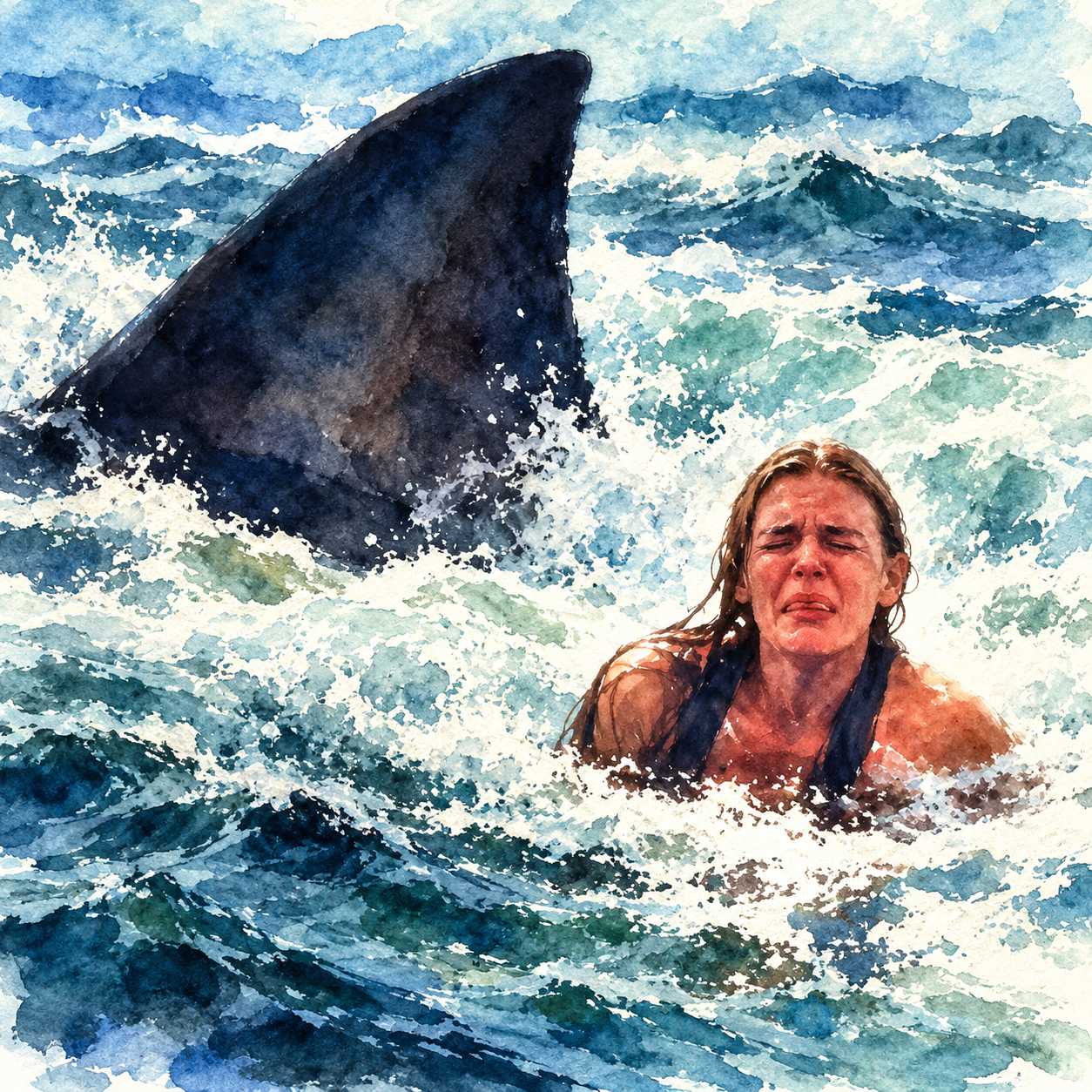
Composer John Williams drew inspiration for some elements of the score for “Jaws” from Herrmann’s style, particularly the notes that suggest approaching danger.
Music producer George Martin was also influenced by “Psycho’s” music while preparing the string arrangement for The Beatles’ song “Eleanor Rigby” in 1966.
Herrmann’s influence even reached hip-hop music, as segments inspired by his compositions were used in several works, most notably Busta Rhymes’ 1998 song “Gimme Some More.”
A creative relationship that ended in disagreement
Hitchcock and Herrmann collaborated on a number of notable films, including “Vertigo” and “North by Northwest.”
However, their professional relationship ended in 1966, during work on the film “Torn Curtain,” after Herrmann refused to fulfill the director’s wish to deliver a score closer to a popular style.
Despite this, the composer continued his career and left a distinctive mark on Martin Scorsese’s film “Taxi Driver,” released in 1976, after Herrmann’s death in December 1975.
A musical legacy that transcends time
“Psycho” achieved major commercial success, earning around $32 million at the box office, against a budget of no more than $800,000.
But its true legacy went beyond the box office, as it proved that film scores are not merely background for scenes, but an essential element in building suspense and emotional impact.
Decades later, the sharp violin sounds of “Psycho” remain a symbol of cinematic horror, and proof of music’s power to breathe new life into images.
Source: BBC, article by writer Thomas Hobbs