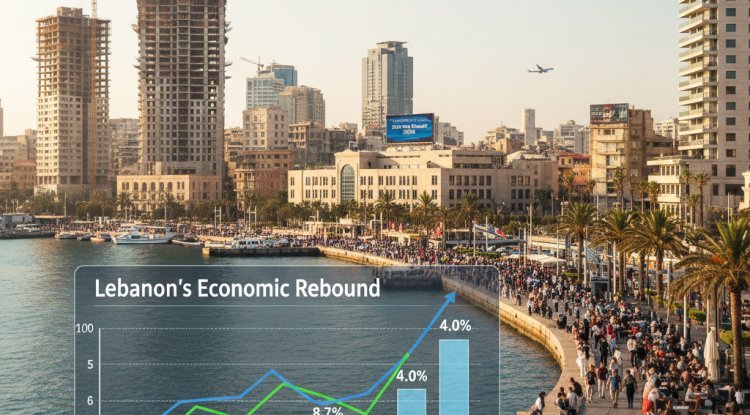
Lebanon Projects 4% GDP Growth for 2026 Amid Structural Stabilization
Lebanon’s economy signals a rebound with 4% GDP growth projected for 2026. Discover the drivers behind the recovery, from dollarization to tourism and fiscal reforms.
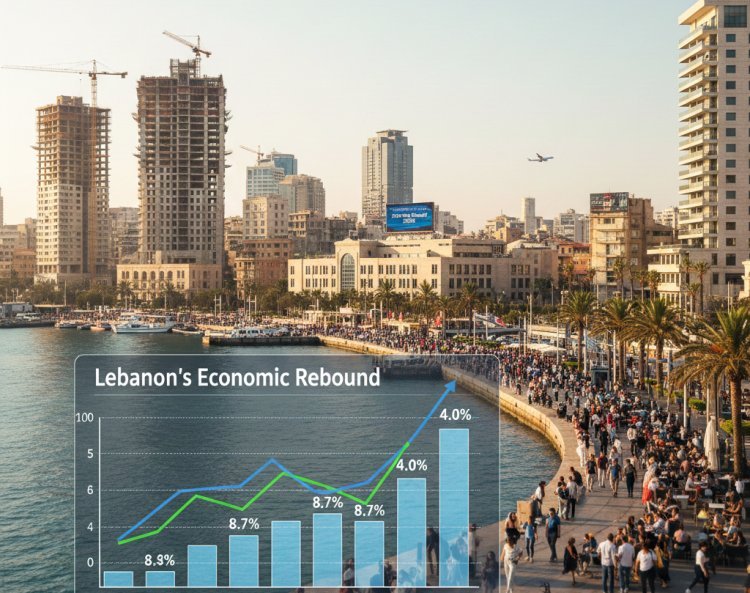
BEIRUT – After years of unprecedented systemic contraction, the Lebanese economy is showing signs of a "fragile but persistent" rebound. According to the latest figures from the World Bank and national fiscal reports, the country’s GDP grew by 3.5% in 2025 and is officially projected to reach 4.0% by the end of 2026.
The Mechanics of Recovery
The primary engine of this recovery is the extensive dollarization of wages and services, which has decoupled much of the private sector from the volatility of the national currency. This transition, while complex, has provided a stable floor for consumer spending and business accounting.
Key Growth Drivers:
-
Tourism Resilience: Despite regional geopolitical shifts, the hospitality sector remains a cornerstone of the economy, bolstered by a steady stream of high-spending diaspora visits.
-
Remittance Inflows: External support from the Lebanese diaspora continues to serve as a critical liquidity buffer, fueling domestic demand.
-
Fiscal Discipline: The ratification of a "Zero-Deficit" budget for 2026 marks a pivotal shift toward institutional transparency and balanced spending.
-
Infrastructure Expansion: Initiatives such as the reactivation of the Rene Moawad Air Base (Qleiaat Airport) in the North are expected to decentralize economic activity and create new logistical hubs.
| Economic Indicator | 2023 (Actual) | 2024 (Est.) | 2025 (Proj.) | 2026 (Target) |
|---|---|---|---|---|
| GDP Growth Rate | -0.2% | +1.2% | +3.5% | +4.0% |
| Annual Inflation | 221.3% | 45.2% | 15.2% | 8.7% |
| Revenue (% of GDP) | 6.1% | 13.0% | 15.5% | 16.2% |
| Budget Status | Deficit | Narrowing | Near-Zero | Zero-Deficit |
Source: World Bank Lebanon Economic Monitor (LEM) & Ministry of Finance Report 2026.
The Path Ahead
While the technical recession has ended, analysts warn that long-term sustainability hinges on the finalization of the Financial Stabilization and Depositor Recovery (FSDR) laws and a comprehensive restructuring of the banking sector. For now, the "bottoming out" phase appears complete, as Lebanon transitions from crisis management to institutional rebuilding.