
Tamni Al-Habaib by George Wassouf marks the Syrian singer’s return to the romantic Eastern sound that has defined many stages of his long musical career.
Performed in the Egyptian dialect, the new song blends longing, nostalgia, and classic Arabic melodies. It also reunites George Wassouf with renowned composer Salah Al-Sharnoubi, who previously contributed to some of the singer’s most memorable hits.
Wassouf released “Tamni Al-Habaib” across digital music platforms and social media. The song quickly attracted attention from fans, especially because its melodies evoke the musical atmosphere of the 1990s and early 2000s.
For longtime listeners, the track offers more than a new release. Instead, it brings back a musical identity closely associated with the “Sultan of Tarab.”
Tamni Al-Habaib by George Wassouf Reunites Him With Salah Al-Sharnoubi
The song features lyrics by poet Ahmed Shata and music composed by Salah Al-Sharnoubi. Rami Al-Sharnoubi handled the musical arrangement.
Listeners can also hear the song on Anghami.
The collaboration carries special significance for Wassouf. He previously worked with Salah Al-Sharnoubi on several successful songs, including “Kalam Al-Nas” and “Layl Al-Ashiqin.”
Therefore, their reunion immediately brings back memories of an important period in Wassouf’s career.
The melody itself also has a history. Salah Al-Sharnoubi composed it several years before Wassouf eventually recorded and released it.
As a result, “Tamni Al-Habaib” feels less like an attempt to follow current musical trends and more like a deliberate return to the sound that shaped George Wassouf’s artistic identity.
Fans of George Wassouf will also recognize many familiar elements in the singer’s performance and choice of melody.
George Wassouf’s Romantic Style in Tamni Al-Habaib
“Tamni Al-Habaib” relies on a clear Eastern melody and a traditional romantic structure.
The lyrics focus on longing for loved ones and the desire to hear news about them after a period of absence. This emotional theme fits naturally with Wassouf’s expressive singing style.
Rather than depending only on the strength of his voice, Wassouf gives each phrase space to convey emotion. His performance moves smoothly between longing, reproach, and nostalgia.
Meanwhile, Rami Al-Sharnoubi’s arrangement preserves the song’s classic character.
The production avoids excessive electronic effects or fast rhythms. Instead, it places the melody, lyrics, and Wassouf’s voice at the center of the track.
Consequently, listeners can immediately recognize the traditional Arabic musical style that helped establish Wassouf as one of the Arab world’s most distinctive singers.
What Makes Tamni Al-Habaib by George Wassouf Different?
One of the main strengths of Tamni Al-Habaib by George Wassouf is its simplicity.
While many contemporary Arabic releases rely on fast beats and modern production techniques, Wassouf takes a different approach. The song focuses on three essential elements: melody, lyrics, and vocal performance.
His recognizable voice adds another emotional layer to the track. In particular, the words suit his distinctive way of expressing longing and reproach.
Moreover, the song does not try to reinvent George Wassouf’s musical identity. Instead, it embraces the qualities that audiences have associated with him for decades.
This approach gives the song a nostalgic character without making it feel disconnected from Wassouf’s current artistic journey.
Tamni Al-Habaib Music Video Reflects the Song’s Romantic Mood
The music video, directed by Dan Haddad, follows the same classic atmosphere.
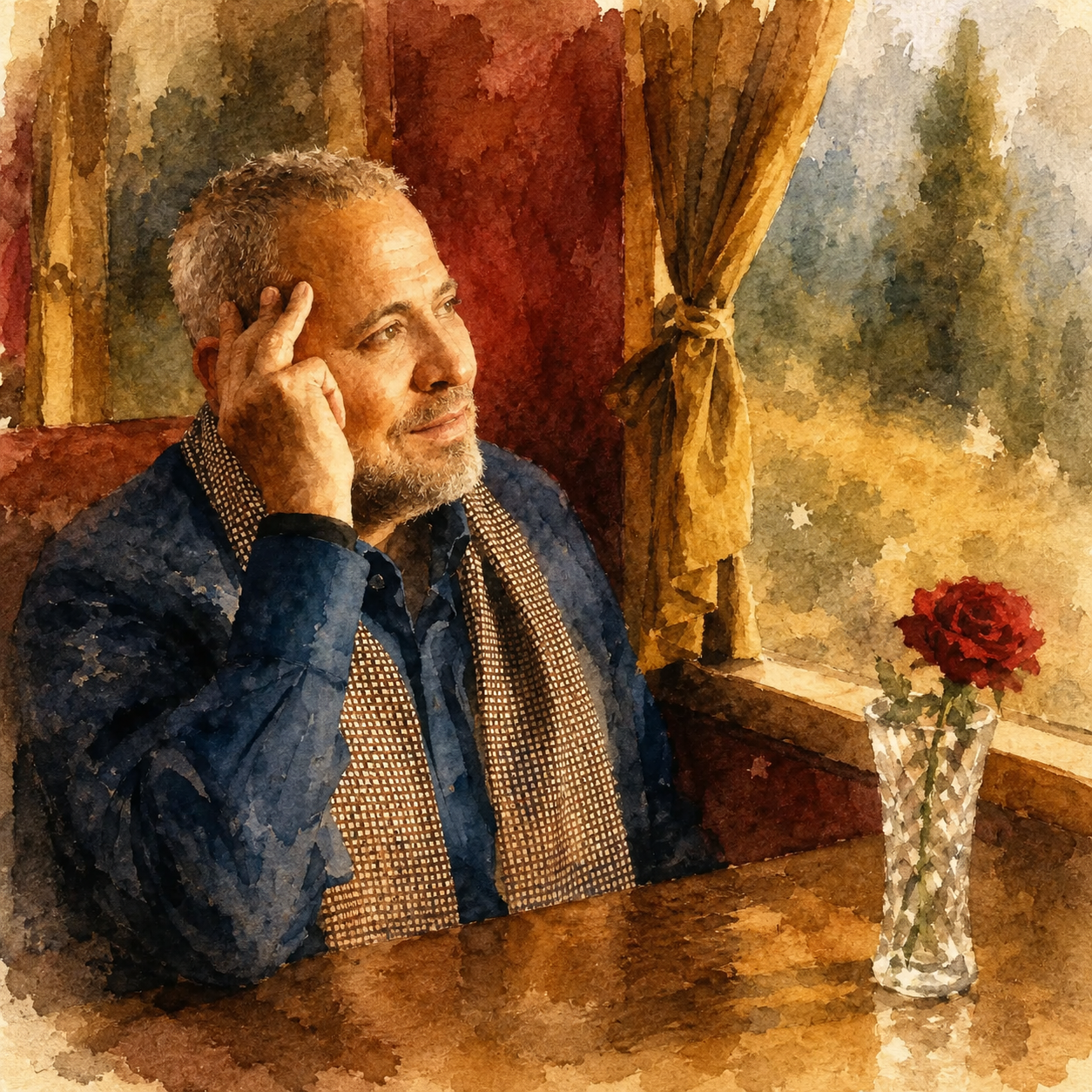
The director chose a cinematic setting aboard a train, where an emotional story unfolds between a young man and a young woman.
The visual concept complements the song rather than distracting from it. The train setting also strengthens the feeling of distance, memories, and longing found throughout the lyrics.
Ultimately, “Tamni Al-Habaib” does not attempt to chase new musical trends.
Instead, George Wassouf relies on his distinctive voice, Eastern melodies, and emotional performance. The result is a nostalgic return to the romantic style that has connected him with audiences for decades.