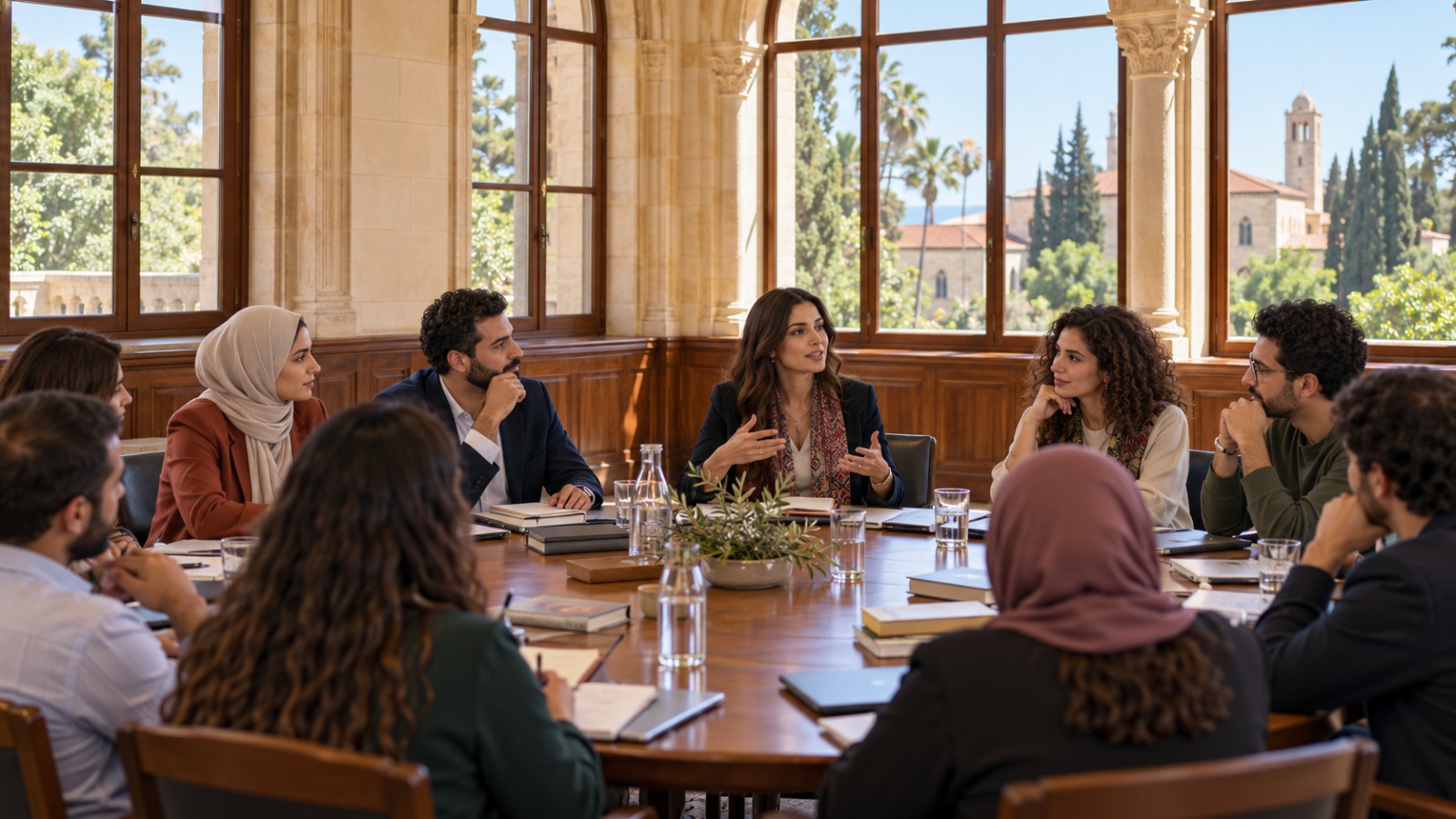

The American University of Beirut hosted the conference “Reimagining Citizenship in the Arab World,” bringing together researchers, policymakers, educators, students and civil society representatives. Participants examined the impact of governance, education, reform and displacement on rights, belonging and public participation.
The conference was organized by the Asfari Institute for Civil Society and Citizenship, the Department of Political Studies and Public Administration, and the university’s Global Engagement initiative, in cooperation with international partners.
Rights and trust in institutions
Lina Abu-Habib, director of the Asfari Institute, stressed the need to create conditions that allow individuals to exercise their rights and contribute to shaping their communities. She linked citizenship to building just and inclusive societies, especially amid wars and instability.
For his part, AUB President Fadlo Khuri emphasized freedom of debate, trust in institutions and equal opportunity. He also highlighted the role universities play in fostering critical thinking and encouraging students to engage in public affairs.
Marwan Muasher, meanwhile, called for serious institutional reforms that strengthen national belonging. His priorities included judicial independence, equality before the law, genuine political participation and gender equality.
Education and civic engagement
Sessions addressed political reform, peacebuilding and the use of artificial intelligence in public services. Discussions also covered the rights of refugees, migrants and the displaced, as well as the role of volunteering and solidarity networks during crises.
On the education front, participants discussed citizenship curricula, teacher training and media literacy. The discussions concluded with a call to advance research, partnerships and policies that protect rights and give the most marginalized groups equal opportunities to participate.