
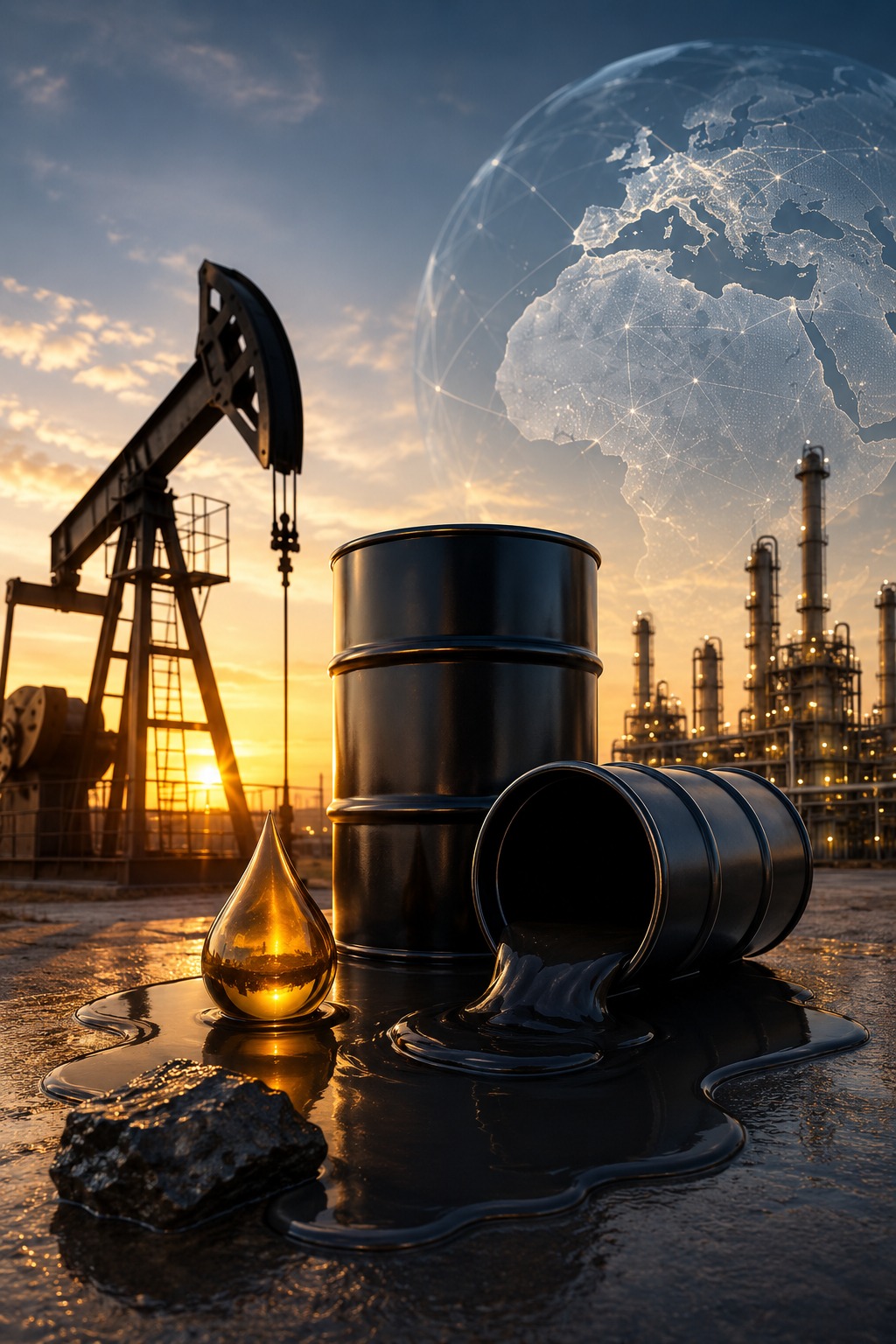

Oil ranks among the world’s most important natural resources. People often call it “black gold” because it plays a vital role in energy, industry, and the global economy.
Oil Brings Major Transformations
The discovery of oil transformed human life and accelerated industrial development. Today, it powers factories, vehicles, ships, aircraft, and many essential services.
Oil is a flammable natural liquid found deep beneath the Earth’s surface. It developed over millions of years from decomposed plant and animal remains. Layers of rock and sediment gradually covered and compressed these remains.
An Important Energy Source
Oil mainly contains hydrocarbons, which provide a powerful source of energy.
Energy companies extract oil from underground fields by drilling wells with advanced equipment. They then transport the crude oil to refineries for processing.
Refineries convert crude oil into gasoline, diesel, industrial oils, and other useful products.
A Cornerstone of the Global Economy
Oil supports a large part of the global economy. Many countries depend on oil exports as a major source of national income.
As a result, oil prices directly influence global trade, transportation costs, inflation, and economic growth.
Oil also offers many uses beyond fuel. Manufacturers use it to produce plastics, medicines, fertilizers, detergents, synthetic fabrics, and cosmetics. It also appears in thousands of products that people use every day.
Experts expect oil to remain a major energy source for decades. However, solar and wind power will continue to expand worldwide.
Despite this energy transition, oil will continue to influence global politics, trade, and economic development.