
Jordan’s Minister of Tourism and Antiquities Dr. Imad Hijazin is continuing his official visit to Lebanon, a three-day trip that includes a series of official meetings and tours of some of the country’s most prominent religious, archaeological and heritage sites. The visit comes as part of efforts to strengthen tourism cooperation between Lebanon and Jordan and to open new prospects for joint projects between the two countries.
Tourism cooperation between Lebanon and Jordan
Hijazin held a meeting with Lebanese Tourism Minister Laura Khazen Lahoud, during which they discussed ways to develop tourism relations and make use of shared cultural and historical commonalities.
The two sides also discussed the possibility of expanding cooperation in the tourism, hospitality, restaurant and franchise sectors, in a way that would help boost exchange and create new opportunities for both the public and private sectors.
In a special interview with Follow Lebanon, Hijazin stressed the importance of the shared cultural heritage that unites Lebanon and Jordan.
He affirmed that making use of these shared elements represents a key entry point for developing the tourism product and strengthening openness between the two countries.
He also noted that this cooperation opens the door to new initiatives and projects that go beyond traditional tourism promotion toward more integrated partnerships.
Tourism trails linking Lebanon, Syria and Jordan
The regional dimension was not absent from the talks, especially in light of efforts aimed at reviving tourism cooperation between Lebanon and Syria and the possibility of developing tourism trails extending into Jordan.
Lahoud had previously discussed with Syrian Tourism Minister Mazen al-Salhani ways to facilitate visitor entry procedures and boost tourism exchange, as well as the development of joint trails linking the three countries.
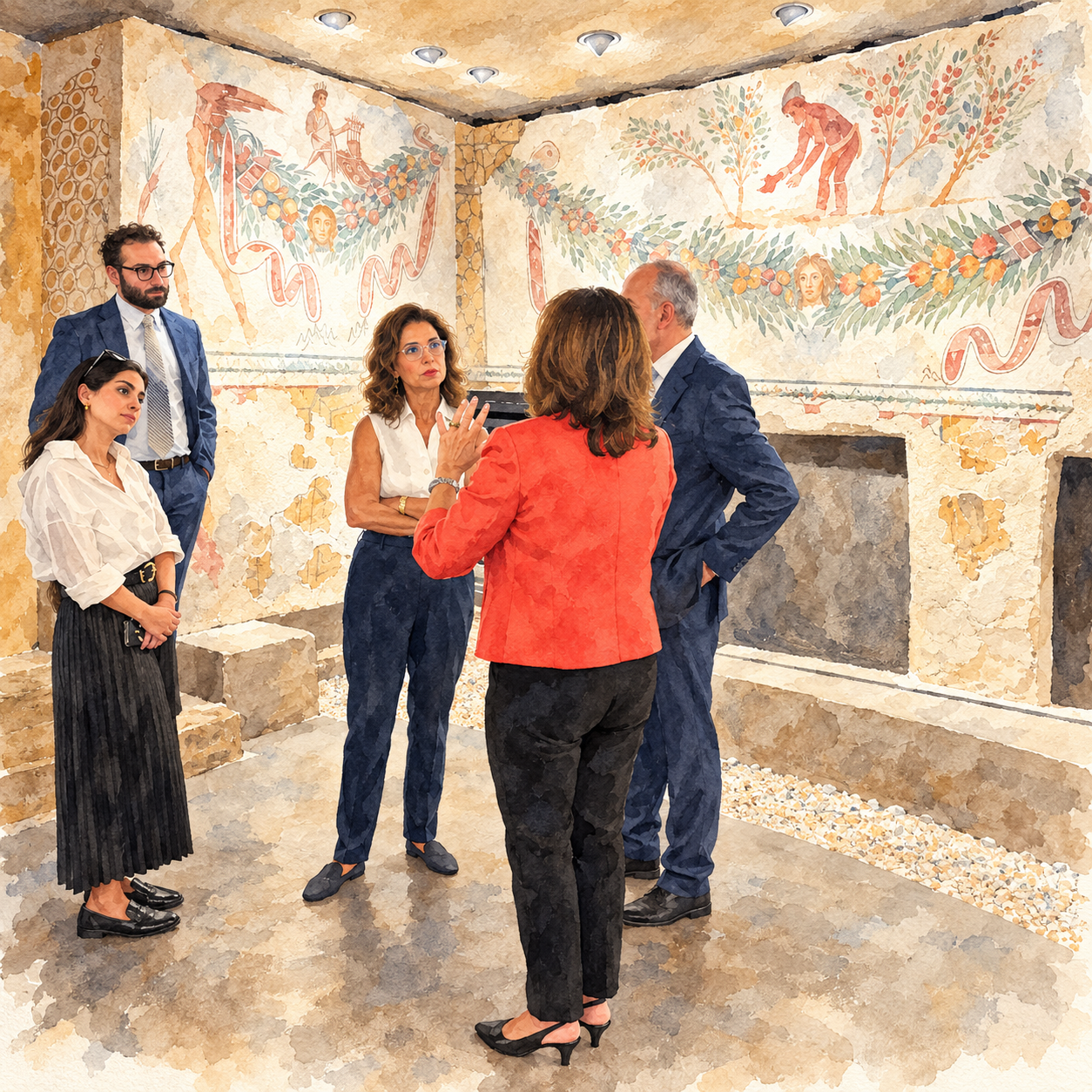
In this context, during a tour by Hijazin and Lahoud inside the National Museum in Beirut, Follow Lebanon asked the Lebanese tourism minister about the fees imposed on Lebanese citizens entering Syrian territory.
Lahoud indicated that there is cooperation and ongoing follow-up on the matter, welcoming efforts to amend and ease these fees and procedures.
She also confirmed that the Syrian side is working on amendments in line with Lebanese procedures, with the aim of facilitating the movement of visitors between the two countries.
The National Museum at the heart of the visit
The visit to the National Museum carried a cultural dimension that reflects one of the central themes of the trip, as both sides focus on turning their shared historical and cultural heritage into an active element of tourism promotion.
The two parties are also seeking to link cultural and religious sites within trails capable of attracting more visitors and strengthening the presence of both countries on the regional tourism map.
Religious tourism as a key focus
Hijazin met with President Joseph Aoun at Baabda Palace, in the presence of Lahoud and the Jordanian ambassador to Lebanon, where discussions covered tourism and cultural cooperation between the two countries.
During the meeting, the Jordanian minister presented the preparations underway in the Kingdom to mark 2,000 years since the baptism of Jesus Christ in the Jordan River in 2030, under the slogan “Jordan, the Dawn of Christianity.”
In this context, religious tourism emerged as one of the central themes of the visit, given the religious and historical sites that both Lebanon and Jordan possess.
Shared trails could also help attract visitors and pilgrims from around the world, linking religious destinations in the region within a more integrated tourism experience.
Joint projects in the next phase
The visit of Jordan’s Minister of Tourism and Antiquities to Lebanon continues for three days, including official meetings and visits to a number of prominent religious, archaeological and heritage sites.
Ultimately, the visit seeks to turn the cultural and historical closeness between Lebanon and Jordan into practical tourism cooperation and joint projects, reinforcing the presence of both countries on the regional and international tourism map.