

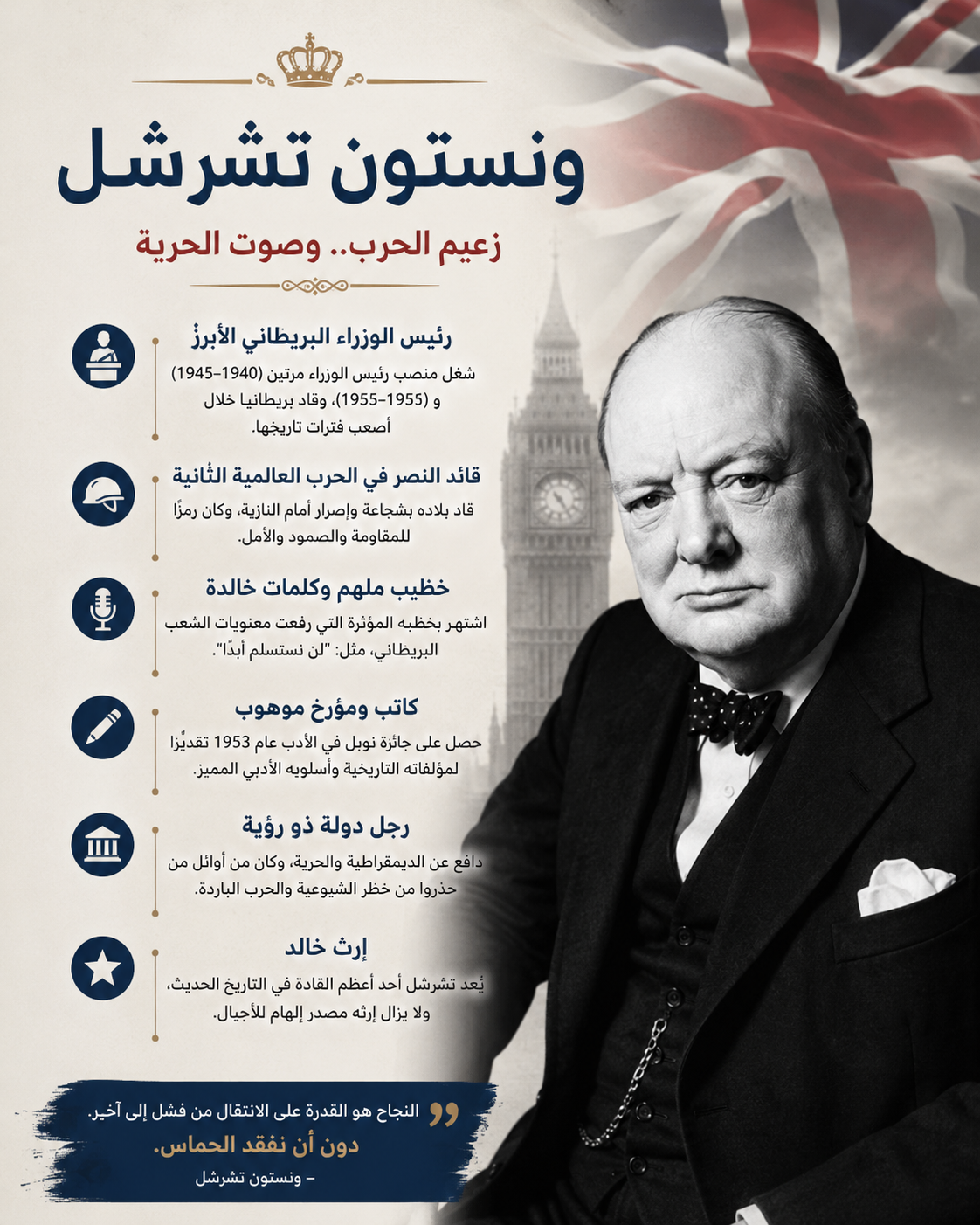

One of the most prominent political figures of the 20th century, his name became closely associated with leading Britain through the most difficult stages of World War II. He was distinguished by his strong personality and inspiring speeches that boosted British morale in the face of challenges. He also combined political work with historical and literary writing, making him one of the most influential leaders in modern history.
Winston Churchill was born on November 30, 1874, into a well-known British aristocratic family. He was educated at the Royal Military Academy Sandhurst, and began his career as an army officer before moving into journalism and politics.
Member of the British Parliament in 1900
In addition, he was elected a member of the British Parliament in 1900. He held several important ministerial posts during his political career, and was known for his bold decision-making and, at times, controversial positions.
Prime Minister in 1940
He therefore became one of the most prominent political figures in Britain during the first half of the 20th century. He assumed the premiership in 1940 and led the country during the war against Nazi Germany.
Winston Churchill played a pivotal role in strengthening the resilience of the British people. He contributed to building the alliance with the United States and the Soviet Union against the Axis powers.
He became renowned for his passionate and impactful speeches, which raised British morale during the war years. Among his most famous phrases was “We shall never surrender.” His speeches are considered among the most important political speeches of the modern era.
Documented World War II in writings
He authored many books and historical studies, documenting the events of World War II in renowned works. He was distinguished by a celebrated literary style that combined precision with engaging narration, and he received the Nobel Prize in 1953.
He returned to the British premiership between 1951 and 1955. He warned early of the growing Soviet influence in Europe and contributed to shaping policy during the early years of the Cold War. He remained an influential figure in international politics until his retirement.
Finally, he died on January 24, 1965, at the age of 90. A major state funeral was held for him, considered the largest in British history. He is regarded as one of Britain’s greatest leaders, and his name remains associated with courage, determination, and leadership in times of crisis.