
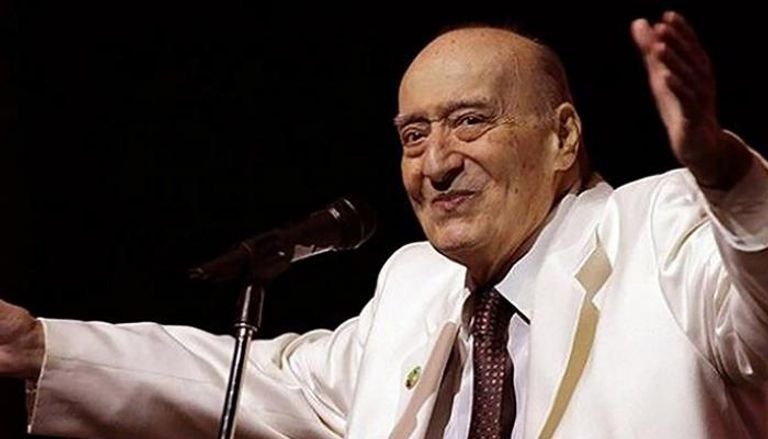

Learn about the biography of Wadih El Safi, the giant of Lebanese singing and the Voice of Lebanon, the key milestones of his artistic career, his most famous songs, and his role in developing Lebanese and Arab music.
Wadih Francis, known as Wadih El Safi, was born on November 1, 1921, in the town of Niha in the Chouf District of Lebanon, and is considered one of the leading pioneers of Lebanese song in the twentieth century.
Starting with a talent competition
His true beginning came in 1938, when he won a talent competition—an event that marked the real launch of the man who would later become a giant of Lebanese tarab.
Voice of Lebanon and the Maestro of Music
Among his most important titles are “The Voice of Lebanon” and “The Giant of Lebanese Tarab”, He helped cement Lebanese folkloric and mountain music and bring it to the Arab world, becoming a landmark figure in singing.
He was distinguished by a powerful mountain voice, a wide vocal range, and exceptional performance, composing and singing hundreds of songs that became classics of Arab art.
He collaborated with leading poets and composers in Lebanon and the Arab world, and among his most famous songs are “Andak Bahriyyeh Ya Rayyes”, “Tallo Hbabna Tallo”, “Lebanon Ya Qit‘at Sama” and “A Allah Ta‘oud, A Allah”.
Festivals, concerts, and a prominent mark
He took part in many Arab and international festivals and concerts, and left a prominent mark on Lebanese song and patriotic music, singing about the homeland, the army, and the South.
Many Lebanese artists followed in his footsteps and re-sang his songs, as he became a school of singing, and received many medals and honors during his lifetime.
He passed away on October 11, 2013, at the age of 91, and is still considered one of the most important symbols of Lebanese and Arab art, playing a fundamental role in the development of Lebanese and Arab song.