

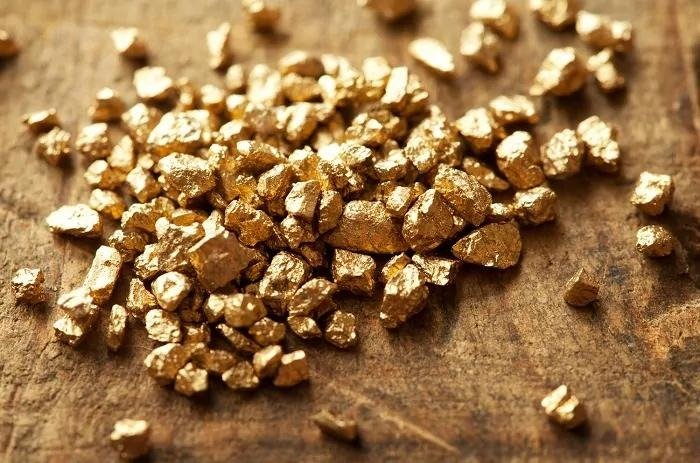

Learn about gold, one of the world’s most precious metals, and discover its history, properties, and uses in investment, jewelry, and modern industries.
Gold is a chemical element with the symbol Au and atomic number 79. It is considered one of the world’s precious and rare metals, characterized by its shiny yellow color and its resistance to rust and corrosion.
Used in Jewelry and Statue Manufacturing
Furthermore, ancient civilizations have known it for thousands of years. The Pharaohs and Romans used it in the production of jewelry, statues, and coins, where it served as a symbol of wealth, power, and authority throughout history.
It is considered a soft metal, highly malleable and ductile, and a good conductor of electricity and heat. It does not react easily with most chemical substances.
Deposits Found in Rocks and Rivers
Therefore, it is extracted from mines located across various continents. Leading producing countries include China, Australia, Russia, Canada, and South Africa. Its deposits are found in rocks, rivers, and some mountainous regions.
Gold is used in the manufacturing of luxury jewelry and ornaments, as monetary reserves by central banks, in electronic and medical industries, and for investment through bullion and gold coins.
A Safe Haven for Investors
It is considered a safe haven for investors during economic crises. Its price is influenced by supply and demand factors and interest rates, playing a significant role in stabilizing global markets.
Gold exists in trace amounts in seawater, and most of the gold extracted throughout history is still present today.
Finally, demand for gold as an investment tool continues, and its use in advanced technology is increasing. Experts anticipate that it will maintain its position as one of the world’s most important precious metals.