

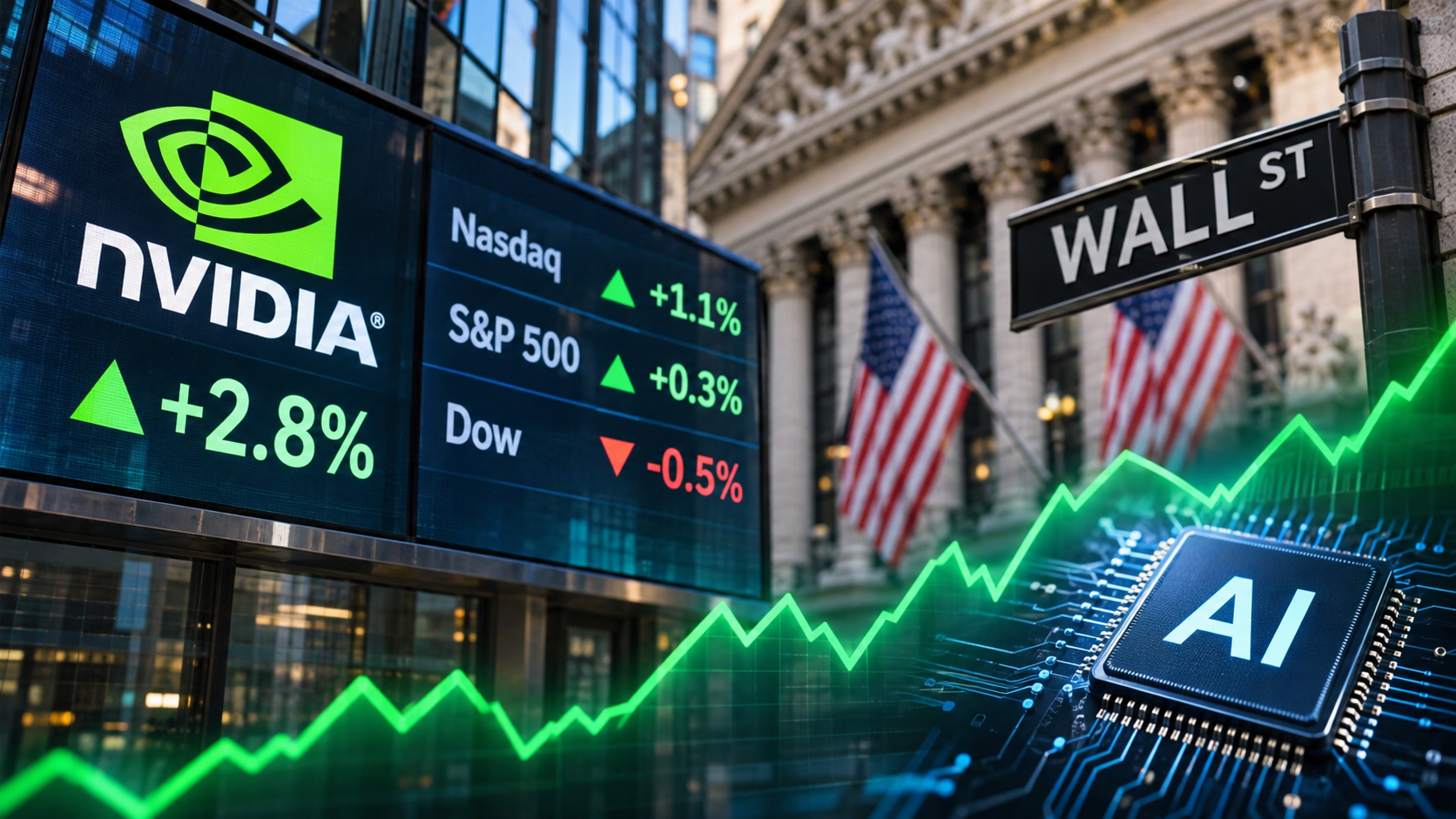

AI stocks staged a notable rebound in Friday trading, recovering part of their sharp losses from the previous two days.
The improvement helped calm global markets, as investors awaited the economic implications of the US midterm election results.
The S&P 500 rose 0.3%, trimming its weekly losses to 2.7%. Despite this improvement, the index recorded its worst weekly performance since April 2025, when tariffs imposed by President Donald Trump roiled markets.
Meanwhile, the Dow Jones fell 237 points, or 0.5%, while the Nasdaq rose 1.1%.
Nvidia Leads AI Stock Rebound
Nvidia helped support US markets, as its shares rose 2.8%. The gain followed two sharp declines of 9.3% and 3.2%.
Technology companies linked to AI data centers also benefited from improved investor sentiment, after the US election results raised concerns about a possible slowdown in the construction of new data centers.
These concerns are concentrated particularly in Texas, where anxiety is growing over higher electricity bills resulting from the expansion of data centers.
Companies also face additional challenges from rising borrowing costs, amid warnings of overvaluation in the sector’s stocks.
Strong Gains for Tech Companies
IREN, which provides infrastructure and computing services for AI, jumped 20% in its share price. The surge followed quarterly results that exceeded analysts’ expectations, along with the signing of two new contracts.
Lam Research shares rose 8.2% after the company announced a share buyback program worth up to $25 billion.
CoreWeave climbed 6.3%, while Micron Technology gained 5.1%, supported by improving performance in the tech sector.
Globally, the stability of Wall Street helped halt a broad wave of selling, after stock indexes in Tokyo and Seoul had dropped 6%, while Germany’s DAX lost 1.9%.
Despite the AI stock rebound, US market performance remained mixed, with a number of stocks in the S&P 500 index declining.
The recovery in tech stocks remains an encouraging sign for investors, as markets continue to seek a balance between growth opportunities and the challenges ahead.